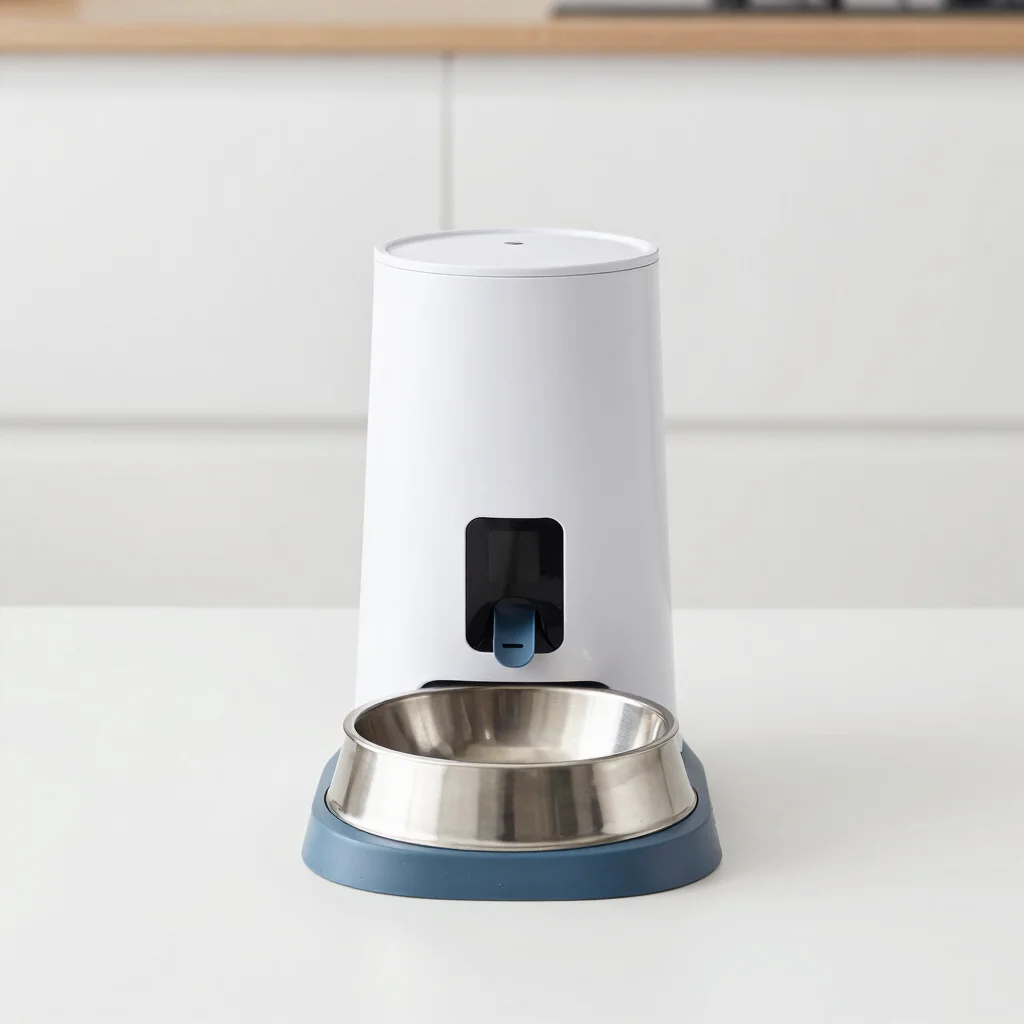
Feeding large or deep-chested breeds like Boxers, Great Danes, and German Shepherds using automated feeders requires careful attention to bowl height, meal pacing, and mechanical stability. Standard floor-level automatic feeders often force large dogs to hunch during meals, which can increase swallowed air during rapid eating.
Meal Pacing and Portion Control Mechanisms
Programmed slow-feed options disperse kibble into multiple micro-meals spaced over ten to fifteen minutes rather than dumping an entire portion at once. This slow-release dispensing helps regulate eating speed and prevents gulping, which is a primary concern for deep-chested dogs prone to gastric bloat.
Bowl Elevation and Ergonomic Alignment
Placing an automatic feeder on a wide, anti-slip raised platform aligns the food tray closer to the dog's natural chest level. Proper elevation reduces neck strain and encourages a natural swallowing posture without sacrificing the mechanical accuracy of the feeder's internal dispensing rotor.
Capacity Demands and Kibble Size Compatibility
Large breed dogs frequently require larger kibble sizes that can jam narrow rotor mechanisms designed for small breeds. Selecting an automatic feeder rated for kibble diameters up to eighteen millimeters ensures smooth operation and prevents missed feedings while maintaining precise volumetric dosing.